Wednesday, 11 September 2013

Story of a Mayan Civilazation

From 250 A.D. to 900 A.D. life was all plain sailing without putting out to sea. Mayan culture was amazing and their skills manifold. Especially in the artistic department. They invented a very colourful style of picture-writing with glyphs, and made codex books the size of screens. Their book was fragile it was unspeakable.They didn't have horses so they didn't need carts. Instead they had a river and canal system for shifting heavy goods. Some of their cities have never been bettered, and after so many years of neglect much is still standing in Copan, Chichen-Itza, Kabah, Palenque, Uxmal, Tikal and Mayapan. Maya lived in city states throughout the Yucatan Peninsula, parts of Honduras, Belize, Guatemala, and the El Salvador areas of modern Mesoamerica, but shared worship of the same gods and goddesses and human sacrifice.  The Maya civilization spread into the area of Belize between 1500 BCE and CE 200 and flourished until about CE 1200. Several major archeological sites—notably Cahal Pech, Caracol, Lamanai, Lubaantun, Altun Ha, and Xunantunich reflect the advanced civilization and much denser population of that period.

At its peak, the total population may have reached 2 million people, the majority of whom lived in modern-day Guatemala. The cities seem to have been mainly ceremonial centers, with the majority of the Maya living a rural, agricultural life around the cities. The Maya are a native Mesoamerican people who developed one of the most sophisticated cultures in the Western Hemisphere before the arrival of the Spanish.The remaining Maya were conquered by the Spanish and converted (at least nominally) to Roman Catholicism. The present-day Mayan peoples are spread mainly across southern Mexico, with small numbers in Guatemala and Belize. They practice a religion that combines Roman Catholicism with Mayan cosmology, deities, and domestic rituals.

Religion- are characterized to worship of nature gods (especially the gods of sun, rain and corn), a priestly class, the importance of astronomy and astrology, rituals of human sacrifice, and the building of elaborate pyramidical temples. Maya maintain a strong link to the past through rituals, folklore and family. Fiestas, dancing and traditional music remain important as several festivals and celebrations occur throughout the year. On these special occasions, masks and elaborate costumes are worn by dancers, singers, and musicians.

Around 300 B.C., the Maya adopted a hierarchical system of government with rule by nobles and kings. This civilization developed into highly structured kingdoms during the Classic period, A.D. 200-900. Rulers were believed to be descendants of the Mayan gods and their blood was the ideal sacrifice, either through personal bloodletting or the sacrifice of captives of royal blood. The Mayan vision of the universe is divided into multiple levels, above and below earth, positioned within the four directions of north, south, east and west. After death, the soul was believed to go to the Underworld, Xibalba (shee bal bah), a place of fright where sinister gods tested and tricked their unfortunate visitors. As with all Myths about Mayan Gods and Goddesses - Mayan Myths discuss connections with being from other realms who came to Earth to seed the planet.

Between 1200 and 600 BC Maya ideology was influenced to some degree by the Olmec people from the Tabasco-Veracruz area. During this time the Belize Maya Incorporated many Olmec-like symbols on their ceramics and artifacts. In the classic contacts with other regions were maintained for the acquisition of exotic materials that served both utilitarian and decorative purposes and for social political reasons. The Maya of Belize have never lived in isolation. For those who follow the ancient Maya traditions, the belief in the influence of the cosmos on human lives and the necessity of paying homage to the gods through rituals continues to find expression in a modern hybrid Christian-Maya faith.
The Maya calendar is a system of calendars used in pre-Columbian Mesoamerica, and in many modern communities in highland Guatemala and in Veracruz, Oaxaca and Chiapas, Mexico. The Maya calendar consists of several cycles or counts of different lengths. The 260-day count is known to scholars as the Tzolkin, or Tzolk'in. The Tzolkin was combined with a 365-day vague solar year known as the Haab' to form a synchronized cycle lasting for 52 Haab', called the Calendar Round. Smaller cycles of 13 days, the trecena, and 20 days, the veintena, were important components of both cycles. Many Maya Long Count inscriptions contain a supplementary series, which provides information on the lunar phase, number of the current lunation in a series of six and which of the nine Lords of the Night rules. Which on this Calendar was used for to track longer periods of time, and for the inscription of calendar dates. A Calendar Round date is a date that gives both the Tzolk'in and Haab'. This date will repeat after 52 Haab' years or 18,980 days, a Calendar Round. For example, the current creation started on 4 Ahau 8 Kumk'u. When this date recurs it is known as a Calendar Round completion.

Arithmetically, the duration of the Calendar Round can be explained in various ways. One way is to consider that the least common multiple of 260 and 365 is 18980 (73 X 260 Tzolk’in days equalling 52 X 365 Haab’ days) Not every possible combination of Tzolk'in and Haab' can occur.


Sunday, 8 September 2013

When Chicle making in Belize

It all started when a man named Thomas Adams Sr. received some chicle from General Santa Anna (yes, the Santa Anna). He tried making toys, rubber toys, rain boots ect. One day in 1869, he popped a piece of surplus stock into his mouth and liked the taste. Chewing away, he had the idea to add flavor to the chicle. In February 1871, he opened the world's first chewing gum factory. He then went to sale in drug stores for a penny a piece.

In the early 20th century, the forest industry revived for a short time. Mahogany and a new product, chicle, became the main export items. In 1890 the US market was introduced to chewing gum or chicle at a World Trade Fair in New Orleans. This led to a boom for the Chicle industry in Belize in the early 1900's. The United States began to import chicle, a gum taken from the sapodilla tree, to make chewing gum. Chicle was used in making chewing gum and other products. It is collected from several species of Mesoamerican trees in the Manilkara genus, including M. zapota, M. chicle, M. staminodella, and M. bidentata.Chicle was well known to the Nahuatl-Aztecs and to the Maya, and early European settlers prized it for its subtle flavor and high sugar content. Sapodilla Tree is used to make Chicle.

The Chicle is collected from the tree by cutting into the bark, much like rubber, which causes the tree to excrete it and it runs down the trunk. It is then extracted from the leaves and creates a lateax from protecting itself from damaging. Then A Cauldron was the used to boil the Sapodilla tree. By moving the Chicle it is moved with a thick wood until it is thicken. The liquid is then placed in an area until it is harden and cool. A mature sapodilla tree must go untapped for three to eight years, depending on the size of the tree, until it can be used again. Using only rope and metal spurs to climb the ten to fifteen meter high sapodilla tree, a chiclero’s work was dangerous.

In the early 1700's men in Cooked Treee village Chicleros occupied the asourrounding area. Often, a chiclero would accidentally cut the rope that as tying him to the tree, when he was climbing. special tools were used to climbing spurs and back harnesses to facilitate climb, camping equipments and bedding, food and water gourds (tuck- tuck) that kept the water fresh and cool, a sixteen gauge shotgun and cartridges and last, but not least, the ever present green canvas shot bag, oil-painted, which makes it waterproof and is kept stacked with dried tobacco leaves, and white paper for them to roll their own (cigarettes) coloduro. The shot-gun was used for self-defense from the various wildlife they encounter, and for hunting wild animals and birds for food.

In the late 1940s and 1950s, the story of the checilero starts to disappear.The former chicleros feel that the younger generation needs to know about their chiclero heritage. I hope that the new genration learns from their parents, grandparents, great grand-parents, and their background heritage.

Saturday, 7 September 2013

Placencia Pier completed after months of contruction

After a year of Constructioning the peir  for Placencia Village, It was finally completed. The pier and plaza was inaugurated on wednesday September 5 2013 as part of the Sustainable Tourism Project. This pier was started back in 2009 when the consultations finally began a year ago. The use for this pier will focus mainly on the fishing co-op and Tourism, one of the pillars of economy of Placencia village. The estemate cost was three million dollar project funded by the Inter-American Development Bank. Joined the inaguaration Minister of Tourism Manuel Herdia Jr and past Village Council Charles Leslie Jr was their to witness the inaguaration and explained the media the completetion of the project. People in the village are happy to see that things has been done in the Village.
Placencia Past  Village Council Charles Leslie Jr. mentioned '' After completing the Peir, I appreciate the project has finished. It is not for the government but for the use of the people in the village, tourist and people who visit's placencia. Let's not distroy this place, because it's for everyone to use. ''
Manuel Herdia Said '' I hope that tourism Industry Benfits from this project as well as the fishing coop. The goal in Belize is that we believe the tourism industry will be a big foreign investment and in a very smart way working along the way with the tourism everything can be done.''

Construction took approximately seventeen months to be completed. Side walk was added to the project. Now that i thas been innaguarted a waterfront shoreline plaza can now been enjoyed.

Thursday, 5 September 2013

Travel Channel Rankes San Pedro number 5 in the World's top 8 beaches

Nothing tops the beach, especially when you bust your butt in the office for vacation time. But let’s be honest, if you’re the kind of traveler who craves adventure, burying your toes in the sand gets old after a few days. The good news? There’s a lot more to beaching than margaritas and chaise longues. Here’s a list of the world’s coolest coastal experiences that you’ve never thought of — you know, just in case your next getaway needs a little spicing up.


1.) Queensland, australia Sand Dune-Sluedding, Morten Island Western Beach if you like a rush, try san-tobogganing. Grab a special waxed board and lie or sit (fowards or backwards) as you sleep ddown a massive dune. for the best ride on earth, head to Moreton Island's Mount Tempest, the world's highest coastal san pile, over 900 feet tall. Feeling extra brave? Try standing up and riding your edges like a surf or snowboard. It's a lot harder than it looks.

 
2.) Mallorca,SpainJetlev-Flyer, Port Adriano Flying isn’t just a superpower anymore. Thanks to a jetpack fitted with a special marine engine, you can literally cruise around like Superman. Visit Mallorca, an island off the coast of Barcelona, and seek out Jetlev-Flyer located in Port Adriano on the island’s southern coast. They’ll hook you up with a jetpack that harnesses water to propel you up over the bright blue Mediterranean Sea.


3.)Railay Peninsula, Thailand Cliff-Jumping, Phra Nang Beach For prime cliff-jumping, head to Phra Nang Beach in Thailand. Since it’s only accessible by a 20-minute boat ride from Ao Nang (the closest small resort town to the beach), tourists haven’t overtaken this long white sand strip just yet. Hike up either side of the limestone cliffs as high as you dare, and take the gut-wrenching plunge from one of the natural platforms into deep turquoise water. If you’re a climber, bring your gear — the tropical climate attracts some of the world’s best athletes who train year-round.


4.)Coromandel, New Zealand Dig Your Own Hot Spring, Hot Water Beach Skip the hotel whirlpool and dig your own Jacuzzi at Hot Water Beach in Whitianga and Mercury Bay on the east coast of New Zealand. A naturally heated river flows into the Pacific Ocean underneath this long strip of white sand bookended by cliffs. Pick up a shovel, start digging and watch as warm water bubbles up. You can dig a romantic bath for 2, or get the kids to help out for a larger pool. If you’re lucky, you can time it right with the tide and get front-row seats to one of New Zealand’s best sunsets.


5.)San Pedro Ambergris Caye, Belize Swim With Sharks and Tropical Fish, Shark Ray Alley Take snorkeling and diving to the next level at Shark Ray Alley in the Hol Chan Marine Reserve. Located about 4 miles south of San Pedro, Belize, this slice of ocean attracts harmless nurse sharks, rays, sea turtles, spotted dolphins and dozens of species of tropical fish. Boat tours take you out for less than what you’ll spend on dinner. Swim with the curious marine life and bring an underwater camera to capture it all.


6.)Dubrovnick, Croatia's Kayak the Dalmatian Coast, Zaton Bay Beach Croatia’s Dalmatian Coast is pocked with inlet beaches and bays perfect for sea-kayaking. Head to Zaton Bay Beach, 6 miles north of Dubrovnik, where you can put in a kayak and cruise around, sheltered from the country’s infamous coastal gusts. Check out the bubbling underground springs, stone villas from the Renaissance, and cliffs and caves. Plus, a handful of private coves offer the perfect spot for a mid-paddle snorkel or a cliff-jumping break before turning around.


 7.)Hawaii,USA Camp on the Beach, Punalu’u Black Sand Beach If you’re a camping freak, Hawaii’s Punalu’u Black Sand Beach is a must. Pitch your tent right on the jet-black volcanic sand (don’t worry, it’s legal), keep an eye out for Hawaiian sea turtles that bask in the sun, and indulge in a nap as the light breeze blows through the coconut trees. It’s located between Hawaii Volcanoes National Park and the small town of Naalehu. The best part? Swimming isn’t ideal here, so most tourists opt for other beaches — you’ll likely be sleeping solo.


8.)Patagonia, ArgentinaRide Horseback, Piedras Coloradas Beach (Near Las Grutas Beach  High tide secludes Piedras Coloradas Beach from Patagonia’s mainland so don’t be surprised you when you’re temporarily cut off. You can reach the strand on foot or by car via a gravel road, but if you want to find your inner cowboy, you really ought to go on horseback — trust us, you’ll be grateful for your mare’s sure footing as you cross the damp ocean floor. Grab a donated book from the small library in the adobe hut, or stroll around and watch fishermen catch octopus. Go in January or February when temperatures are hottest. 


Wednesday, 4 September 2013

Harvest Caye to be Build in tourist destination

It has been weeks since the project was publish in the news about Harvest Caye. and their is an unbalance agreements and disagreements of the project. Stake Bank Project is on the environmental table for discussion and analysis  to discuss the proposed cruise destination that Norwegian Cruise Line wants to build on the island Harvest Caye in southern Belize. In 2009 Environmental Impact Assessment was already approved for Harvest Caye. NCL did not confirm the point of the porject as yet. The latest dealings regarding the Harvest Caye port construction project between Government and Norwegian Cruise Line Prime Minister Dean Barrow said ''40% of what is happening now will be new. NCL wants to employ the port for only 150 days per year, leaving the port vacant for some 215 days. We took well into consideration the fact that they would not be using it all year round.''

Chief Environmental Officer Martin Alegria NEAC discuss in the meeting, ''that the agenda major is State Bank and is still having deliberations. NEAC wants to makes some discisions based on types of proposal and the long terms basis. This developement is seen in two phrase. One that had an airstrip and the next one had triestle-way meaning that cruise ship can park in the island.'' explained Alegria.
Since that their was an MOU a balance of drafting on both parties side were in a binding contract. Dean Barrow had promised that in the binding contract, where either not understood by or the NCL didn't understood the terms of the binding contract.

on the meeting their weren't any final meeting while things was just geting started because there were not enough time. in 2006 State Bank first came to prominence to re-load the the version of the project when the EIA was completed in 2006.

Monday, 2 September 2013

Miss Solani Graniel won Miss San Pedro

Miss Solani Graniel is offically crowned Miss 2013/2014 Miss San Pedro. Being on the stage all six contestants had the oportunity to compete with each other. Showcasing their presentation they competed against each for their Bikini suite and costume.Their beautiful costume each had to show and explained their costume made the audience have their liking costume. Cometing on the Bikini suite they had stage hype as the auidience shouted for their favourite competitor. Question was very challenging to answer but still manged to answer their original answers. Each one answered their question with a smile and nervousness that still lead them to answer some where not to nervous but still mange to answer their question. Naiely Puc had her last words before she can give her crown to another competitor. She explained that she the most enjoyable year traveling around the country when their was and event. Puck says that who ever wins this year will have a memorable year and not only that they have the greates experience in their life.

 Gabriela Varela was the first runner up which lead Solani Graniel that made a great competion that lead her win Miss San Pedro 2013/2014, because of her great answer and question. Miss Congeniality was won by Venancia Chuc given the gift by Miss Chiquitita. Yanira Lara won the Miss Photogenic 2013. It was a tough competetion among all contestants which made an excellent job. They started the show by showing their dancing moves and then showed the swim suite and costume. Between the show local presentation by Lady Leela Vernon and the Baymen Clan Band and Ernestine Carballo and much more hyped the stage with enjoyable songs. It was a show you couldn't missed as all six contestant did a wonderful job. Congratulation to Miss 2013/2014 Miss San Pedro Solani Graniel.


Naiely Puc saying her last words before crowning Miss San Pedro 2013/2014.  


Solani Graniel Representing Castillo's Hardware. She will be officially crown on September 10, 2013 by 2012/2013 Miss Naiely Puc.


Sunday, 1 September 2013

Rememberance of George Cadle Price

In January 15, 1919 George Cadle Price was born in Belize City, in what was then British Honduras, to William and Irene (née Escalante) Price. He studied at St. Johns College, Belize. The Right Honourable George Cadle Price, P.C., was the first Prime Minister of Belize and is considered to have been one of the principal architects of the country's independence. Today he is referred to by many as "the Father of the Nation". Mr. Price, served as a Member of the Legislative Council from 1954-1961, The Legislative Assembly from 1961 to 1964, The House of Representatives from 1964-1984, First Minister from 1961 to 1964, Premier from 1964 to 1981 and Prime Minister of Belize from 1981 to 1984, and 1989 to 1993. He was awarded the status of National Hero by the Government of Belize, the Jose Marti Award – Cuba’s Highest Award by President Fidel Castro, and the Order of the Caribbean Community. His lifestyle, humble and unpretentious, led him to become the first Premier of Belize in 1981 under the People’s United Party, which he founded. In September 2000, Price became the first person to receive Belize's highest honour, the Order of National Hero, for the prominent role he played in leading his country to independence. He has received similar honours in other Caribbean and Central American countries. In 1982, he was made a member of the Imperial Privy Council. Due to his struggle for independence and many other achievements Honorable George Price soon became the Father of the Nation.


In 1940, have never been definitively settled from the point of view of Guatemala.
The dispute originated with the Treaty of Tordesillas of 1494 which divided the so-called New World between Spain and Portugal. However, England and other European countries refused to recognise the legitimacy of a treaty to which they were not parties. By the Treaty of Godolphin of 1670, Spain confirmed England was to hold all territories in the Western Hemisphere that it had already settled, but England did not occupy Belize when it signed the Treaty.

Eventually, in 1821, Guatemala became independent of Spain, and, in 1862, Belize became a British colony. By the Anglo-Guatemalan Treaty of 1859, Guatemala agreed to recognise Belize and Great Britain promised to build a road from Guatemala to a nearby Belizean city.

However, in 1940, Guatemala claimed that the 1859 treaty was void because the British failed to comply with economic assistance provisions. But a ruling by the International Court of Justice (ICJ) required that Guatemala honour the boundaries in the 1859 treaty, even if the UK never builds the road.Guatemala was obviously still unhappy with the ICJ ruling on September 21, 1981 when Belize became an independent nation, as Guatemala City refused to recognise Belize's independence until 1991, at which time diplomatic relations were established.

But in that same year, Guatemala renewed its claim on Belize, basing its position on heritance of Spain's rights. In June 2008, the Belizean prime minister, Mr Dean Barrow, proposed referenda for the citizens of Belize and Guatemala, asking whether they support referring the issue to the ICJ.

Then, in September 19, 2011 Rt. Hon. George Cadle Price, who passed away at 6:30 2 days before Independence. Made him a Remeberance time forBElize.

Friday, 30 August 2013

Dust in the caribbean worries scientists

SAN JUAN, Puerto Rico, Friday August 30, 2013 – Clouds of African dust have been sprinkling their contents across the Caribbean for as long as there's been sand in the Sahara Desert. The phenomenon is nevertheless attracting increasing attention from regional scientists who believe that the clouds have grown, even if there's no global consensus on the issue.
Recently, an unusually large cloud dusted the Eastern Caribbean, generating hazy skies and vivid sunsets before drifting over Mexico's Yucatan Peninsula and moving on to be detected as far away as Wyoming in the United States.
Satellite images from NASA show these huge, smoky clouds wafting westward from Africa and blanketing hundreds of square miles.
Although the microscopic dust particles sent aloft by African sandstorms have hitherto been accorded little more than moderate interest, experts are now saying that the particulate matter may be cause for health concerns and merit more study to understand their potential impact.
According to Braulio Jimenez-Velez, a specialist in molecular and environmental toxicology at the University of Puerto Rico at Mayaguez, "It is a matter of great magnitude, interest and importance for health."
So far this year, Sahara dust has prompted two health alerts in Puerto Rico for asthma sufferers and people with allergies. The Dominican Republic also issued a warning.
Many Caribbean territories, including Puerto Rico, have high asthma rates, but no direct link has been established between African dust and higher rates of asthma or lung cancer.
Over time, human activity has changed the composition of the clouds, with scientists saying that they now contain trace amounts of metals, microorganisms, bacteria, spores, pesticides and faecal matter, although no evidence exists that the quantities are sufficient to pose a threat.
African dust sampled in Barbados also had elevated levels of arsenic and cadmium, according to Joseph M. Prospero, professor emeritus of marine and atmospheric chemistry at the University of Miami.
"The specific impact on health is not known here or anywhere else. It has been extremely difficult to link specific particle composition to health effects," said Prospero, who is lead author of a paper on the dust to be published in September by the bulletin of the American Meteorological Society.
"So it cannot be said what effect all this dust has, but there is reason for some concern," the expert added.
Eugenio Mojena of Cuba's Institute of Meteorology said the particles are believed to originate in the semi-arid Sahel region south of the Sahara Desert, where farmers raise livestock and employ chemical fertilizers and pesticides.
Experts also worry that chemicals in the clouds may pose a threat to coral, although the theory is still a subject of debate.
The dust clouds can also complicate air traffic by reducing visibility to less than 3 miles, said Jason Dunion, a researcher at the National Oceanic and Atmospheric Administration (NOAA).
On a more positive note, the dust-laden clouds may inhibit the formation of hurricanes and other tropical weather systems in the Caribbean.
According to Prospero, lower rainfall in West Africa presumably causes more dust, which reduces sunlight, lowers water temperatures and cuts evaporation, all factors in cyclonic formation.

Ramon's Village to return to business

Since 1982 Ramon's Village Resort has been on business and has become famous for its natural landscape it presents. Many award was given to the Resort for the past years for it's well service staff. The positive insights of Ramon's Village lead to many tourist attraction. Snorkeling, diving, dining, souviner shop, golf cart rentals, bicycle rentals,and much more were all included in the resort. On August 27,2013 a fire had destroyed Ramon's Village. Hotel management wasted no time on starting to pick up the pieces that were left behind by the fire. Richard Hedrick flew to Belize from the U.S two days later, to meet with the staff to talk ways to start building Ramon's back to it's feet. A press Release on August 28,2013 The owner of Ramon's Village Richard Hedricks spoke to the media saying '' I was relieved that no injuries were reported; however, saddened at the loss. “Our hearts are broken that our beloved Ramon’s has suffered such damage. Over the past twenty-seven years tens of thousands of guests have visited Ramon’s Village and had the time of their lives. However, out of adversity comes steadfastness and you can be assured that very soon the rebuilding of Ramon’s Village Resort will begin. In a short time, the Ramon’s Village that our many guests and friends have come to love and adore will be back hosting guests, and, Lord willing, our little piece of paradise will be better than ever!”

The only rooms and counting were fourty rooms that remain standing and business should start again over the weekend. Manager Einer Gomez told media that the dive shop remains unaffected and business was still ongoing since wednesday. Out of 71 cabanas 29 were burnt down. Explosion was cause by the tanks that was used for the hotel services. The estimation value was estimated about eight million dollars of insurance.

After the fire National Fire Service, went to the resort to do their investigation. This tragic cause of fire led to witnesses speechless.  Mr. Ramon Nunez, always the one who greeted you as you arrive at the reception desk. After a quick registration process, you'll be whisked to your cabana by one of our informative chauffeurs. Ask them anything about the island and they will give you the appropriate answer.

Thursday, 29 August 2013

Fisherman from Guatemala found guilty

46-year-old Elias Chavez a Guatemalan fisherman pleaded guilty to Illegal Fishing in the Blue Hole. According to the Director Clifford Cadle, he was on routine patrol in the Belize Audubon Society vessel in the Blue Hole Natural Monument when he spotted Chavez fishing and approached him. Chavez, who was unrepresented spoke little English, was provided with a translator through whom he pleaded guilty to the charge. he appeared in the Belize City Magistrate’s Court where magistrate Hamilton imposed a non-custodial sentence since it was Chavez’s first conviction. For the offense, he was fined $200 to be paid by September 28, 2013 or spend time in jai for two months. on Januarary 13, 2013 he was caught searching for conchs and fishing inside
the Blue Hole.

Wednesday, 28 August 2013

Ramon's Village in destroyed fire

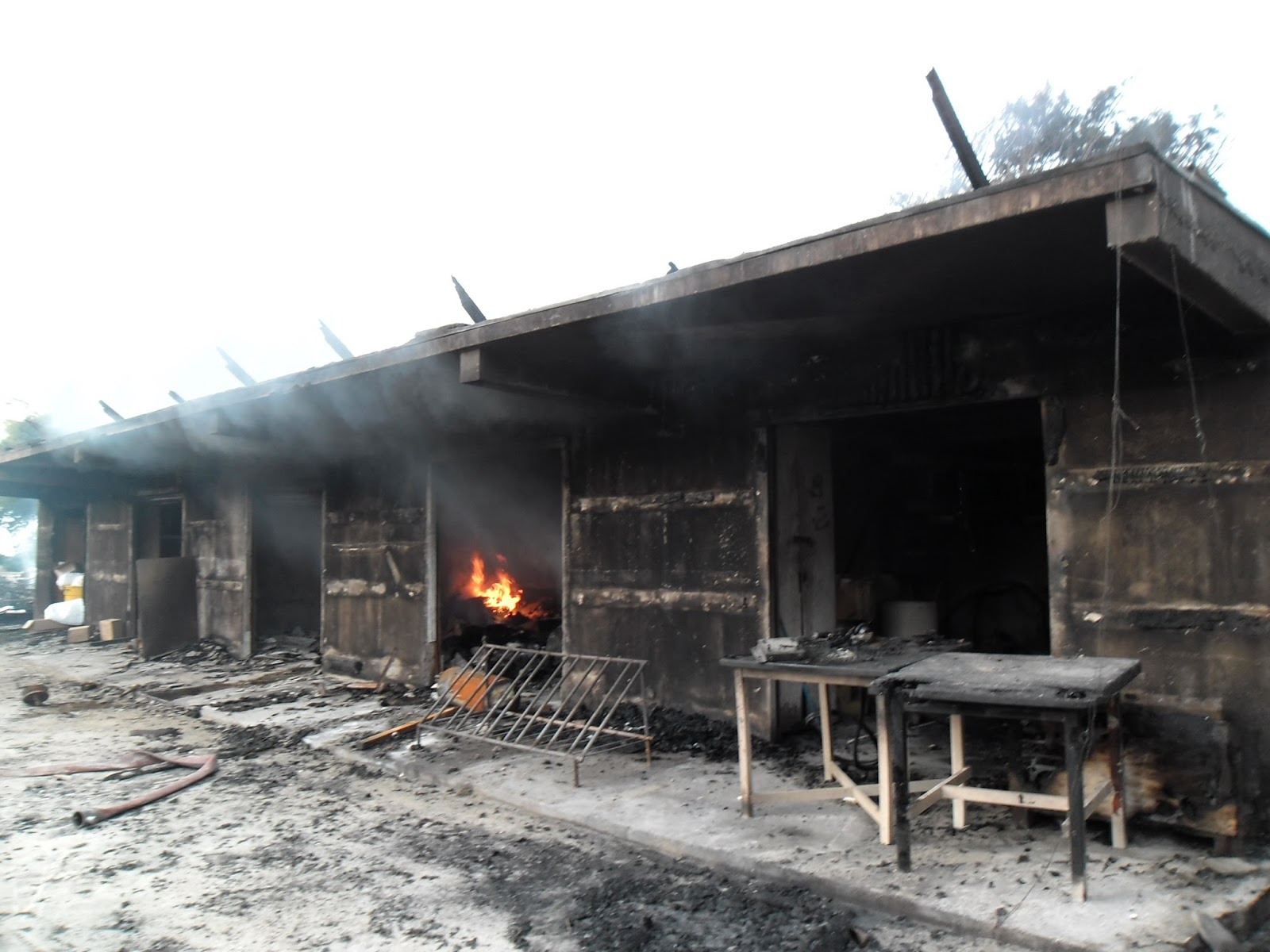
Ramon's Village is well known for its tourism resort in the island yet to enjoy the full service and well staffed service Ramon's Village has to offer. It is the oldest resort still running today since 1982.  It was a quiet night before disaster striked at Ramon's Village Resort. At around 8pm on Tuesday night August 27, 2013 70% of Ramon's Village got destroyed by fire only a few stood up standing in the north portion of the resort. After it's intensd heat of flames between the hour of 8:00pm and 8:30pm the tanks that generated Ramon's Village went into and explosion. The last tank that was felt strong was the one behind the restuarant that had a massive explosive feeling. After the blaze had started the electricity had to be turned of for saftey reasons. People got buckets and fill them with water to help in to turn off the fire, the front portion of the resort where the restuarant is, while another group help to turn off the back portion with the pump generator and the fire engine. With helpless feelings they couldn't do much because of the intense heat burning. Guests had to be evecuated for safety. People were speechless at the time nothing could have been saved but to turn of the fire. Shortly  It took nearly 3 1/2 hours before it all settled into calmness. At this time the resort was almost down into flames. Minister of Tourism Manuel Heredia wants to thank those who help and he is so sad to see one of the oldest most excellent resort go down into flames.

Ramon's Guests had to be taken to another location and gave them the full attention they needed. Services were done a well job for keeping the guests safe. Today when I went up to take some photos the resort was still into flames this morning. I visited the neighbouring behind the resort, one house door got so hot that the door's varnish had melted. One of the street light had melted and left the neighboring area without power. The cause of this massive fire is still unknown. Take a look at this pictures: