Monday, 23 September 2013

21 of September Parade in San Pedro

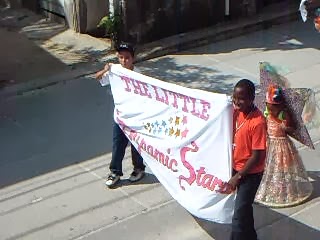
On Saturday September 21, 2013 the Celebration of Independence took place country-wide in Belize. September in Belize is all about celebration and fun. Hearing lots of soca and punta music and people dancing in parades, and seeing buildings dressed up in the red, white and blue streamers, which are the colors of Belize's Flag. It is very fun to see the celebration in San Pedro and around Belize. Colorful costumes and some glitery costume brought the people's attention in each group participants. From smallest child to a grown up adult, each person enjoyed the parade. They dance and celebrated throughout the streets waving some Belize flags. Each group danced and had their moves on and lots of energy to be parading throughout town. The celebration in san Pedro was very excited to see.We hope that next year turns out to be bigger and better. We thank the Town Council for putting the activities in the island.

Each group had different theme of color and costume that presented their group. Here are the winners of this year's Parade.

1st Place - Wil Alamilla - "Shaping up a colorful future"
 2nd Place - Wings

ADULT GROUP:
1st Place - San Pedro AIDS Commission

2nd Place - Sajia's Construction

3rd Place - Just Friends

SCHOOL CATEGORY:
Wil Alamilla "Shaping up a colorful future"

KIDS CATEGORY:
Little Dynamic Stars

All winners can pass by at the San Pedro Town Council to collect their prize.


Here are some photos of the parade on the 21 of September:


Happy Birthday Belize 32 yrs of Independence "September 21, 2013

September in Belize is mostly celerbration. It is the month when we celebrate our 21st Independence and our 10th of Battle of St George's Caye Day. September 19 is now recognized as Service Day For the Memoral Day of George Cadle Price. Service Day is a day when people volunteer to to help the community to become a better community. On Friday September 20, 2013 everyone gathered at the Central Park to enjoy and celebrated the coming of Independence. At 10pm the group of San Pedro dance Group along with 2013/2014 Miss San Pedro Solani Graniel marched their way to Central. The show started with Master of Ceremony Angel Nunez spoke the night away as he went presenting the Minister's and the Mayor. First up was Mayor Daniel Guerrero, gave a speech of planning to fix things up in the island, Welcome Address Wally Nunez, and Vote of Thank by Kenrick William Brackett. After the Official Ceremony, The night went on with presentation dance called ‘’Lucio Groupo de Generacion’’ Showcased their talent and they did a great job presenting their dances. A young lady took the stage for herself as she sang a song called “Madonna-La Isla Bonita.” The presentation continued as the Lucio groupo De Generacion continued their entertainment by presentating their Soca Dance. Shortly before 12 Midnight, a group of Army Dressed in White and Black stood up in line, while the Belize National song was played. While playing the national song, the raising of the flag and their after Solani Graniel was walked along the stage and given the respect of Miss San Pedro. A display of Firework was then showcased at 12 Midnight. This event was presented to by the Town Council and we thank them for this kind of events. Happy Birthday Belize @ 32 yrs "September 21, 2013" Here are some photos of Friday 20,2013 event:

Photos Below:


The Rasing ofthe flag.

The Cadets joined as they stood up for the National Anthem

Fire Works Display


Thursday, 19 September 2013

Over flooded streets in Northern Corozal


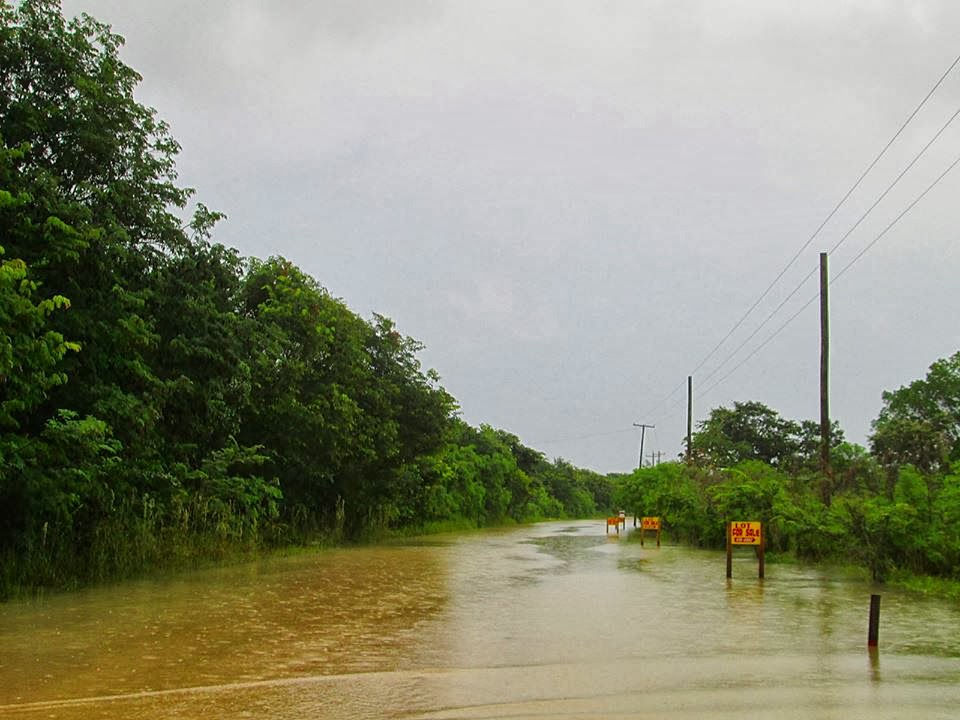
After days of rain in Belize a northern part of Corozal has been flooded here is the story. This particular situation hits me personally since I have so many friends in the beautiful villages of Sarteneja, Chunox, Copper Bank, Progresso, Consejo and other surrounding villages. These are the most humble, peaceful and hardest working people, I have run across in Belize. As Editor of the Corozal Daily, I stand firm in solidarity with them as I feel their pain. It is sad and a crying shame that at a time of Belizean Patriotism/Nationalism, as we comfortably celebrate and rejoice at home our Independence Day Celebrations that for the past months, these villagers and residents have been enduring much pain and suffering in silence.
Their road condition is farthest, the worse. In some areas deep ravines have carved themselves out on the road making traffic impassable and unbearable. Water is as high as 2 feet and more in some areas.
This falls nothing short of the oppression, marginalization and malignity against those that don’t seem to have a voice. It is social injustice and travesty by those that don’t give a damn and those that do not stand up for them. These villagers are tired and have had enough of not being able to make it to their work or just the simplest task of getting their children to school on a daily basis makes it unbearable. This is utterly troubling my friends and I don’t buy the Ministry of Work’s explanation that they have nothing to do with the road project. They have everything to do with it as the overall responsibility of this project lies in the hands of the CEO of the Ministry of Works and the Supervising Engineer is the Ministry of Works, so they are directly responsible for the good governance of this project. Yesterday, the contractor Bella Vista Development/Lopez Equipment Co. Ltd. via a Joint Venture spokesperson stated to the media that the project had been suspended. We ask why since it never got underway?
Belizeans are becoming intolerant of being fooled and everything seemingly being pictured as honky-dory when it is not. It is no longer business as usual. We are tired of the ball always being shuffled around and around when controversy arises in these issues. The poor people in these areas have had it and paying a high price on these games of chance played by both political parties. I am sick of it and WE all are sick of the schisms. In July 2011 a multi-million dollar contract had been signed by the contractor. The work was to commence November 21, 2011 and ended 18 months later on May 21, 2013. This is the second time that the project would seem to have been suspended after 5 years. The first time was on this Government’s first term in office in 2008 when the funds were diverted to Albert Street in Belize City. Is this punishment for the hardworking people of the north, particularly Corozal? Why? The current funds were said to have been allocated under the European Union’s AMS 2008 Sugar Belt Road Rehabilitation Project-Phase 2, which would have seen the paving of the 16 miles of road from the Orange Walk San Estevan Bridge to the village of Progresso in the Corozal District. Where are those funds today?.. Certainly not on the ground and we want to know where is this money? The road project is certainly a key role in the development and growth of the Tourism Industry in these areas but most important for cane farmers and agro business who use this stretch of the road especially during the crop season.
The condition of streets and roads in general has deteriorated in our beautiful Corozal District but even a greater problem has emerged now, due to the past 12 days of continuous rain and flooding. A more striking thought is the noxious spillage of garbage from the dump taking place right along the Consejo Road. For the record, we respectfully draw the immediate and urgent attention to the Ministers and Area Representatives responsible due to a continuing health and safety problems between Corozal Town and Consejo. The road of some 8 miles length is constructed of compacted white marl which is failing to withstand the heavy traffic it now carries. The road invariably floods in the rainy season making it almost impassable. Along the main road at approximately Mile 3.9 lies the Corozal Waste Dump, which is now posing serious health and environmental hazards to the Consejo Communities.
The Corozal Daily takes the liberty today on the eve of our independence day, that as we celebrate we also address these pressing and human issues at a turning point in the way forward for this community. We ask the local chapter of the Corozal Belize Tourism Industry Association, Ministers of Works, Health, Minister of Tourism, Labour, Natural Resources and all Area Representatives of Corozal to draw appropriate attention to these urgent problems facing a community of Belize which honours fully its obligations to the State with no less wish than to see our “Jewel” shine as it should. God Bless the people of Corozal. God Bless Belize.


Wednesday, 18 September 2013

Felicia Chen a mother of three, was remanded behind Bar

On Tuesday morning Felicia Chen appeared  before magistrate's court along with Cheif Magistrate Ann Marie Smith her attorny Antoinette Moore. The women was accused on trying to drown all four of her children back in April 27, but one escaped and survived. She was charged back in April as acts which defy the nature of motherhood and three other charges. It's been four months since she was charged. The Magistrate's Court will be treated her court case as any other defendant. Chen's Psychiatrist mention that her case is being treated very delicated, she is being danger for herself. Report's sent out late, at the time of finding a pyschatrist, Ministry of Health did not have a psychatrist working at the time. Psychatrist Dr. Wesley Quimbo was signed on by G.O.B. and evaluated Chen. She's been receiving treatment at the facility ever since her arraignment, and stood for trial on Tuesday morning. here phsycatrist mention that, Chen is still being treat as a fragile person to face the eyes of the public appearance. Attorneys agreed with the court on an adjournment date. A warrant was signed for Chen and she was taken to Belize Central Prison, which Chen spent her first night on Tuesday.She will be sent back for court case on November 8, 2013.


Tuesday, 17 September 2013

A man in Corozal was shot for urinating in public

 
Around 2am on Sunday morning, A man from Corozal Town was urinating in an open lot beside the Sea Breeze Hotel on First Avenue in Corozal Town. Appearentlly the owner was offended by the guy urinating in his Hotel and took out his rifle ad shot the guy. Suddenly, 27 year old Francisco Castaneda heared a loud bang and shortly after the bang, he felt a pain in his lower left arm and noticed that he started to bleed. 63 year old Gwyn Lawrence owner of SeaBreeze in Corozal town, was then reported by police. He was charged for wounding 27 year old Francisco Castaneda and was to be presented in court on Monday september 16,2013.


Health nutriton (Vitamins, Minerals, Ect)

Many common health problems can be prevented or alleviated with a healthy diet. Dietitians are health professionals who specialize in human nutrition, meal planning, economics, and preparation. They are trained to provide safe, evidence-based dietary advice and management to individuals (in health and disease), as well as to institutions. researchers from the Karolinska Institute, Sweden found that people who ate their "five-a-day" portions of fruit-and-veggies tended to live longer than those who did not. Dietetics: A dietician must have a recognized degree (B.Sc. or M.Sc), or postgraduate degree in nutrition and dietetics to work as a dietician. Protien in the body requires amino acids to produce new proteins (protein retention) and to replace damaged proteins (maintenance). As there is no protein or amino acid storage provision, amino acids must be present in the diet. A complete protein source contains all the essential amino acids; an incomplete protein source lacks one or more of the essential amino acids. That's why sometimes we need meats, tofu and other soy-products, eggs, legumes, and dairy products such as milk and cheese. Some simple carbohydrates (e.g. fructose) follow different metabolic pathways (e.g. fructolysis) which result in only a partial catabolism to glucose, while many complex carbohydrates may be digested at essentially the same rate as simple carbohydrates. Glucose stimulates the production of insulin through food entering the bloodstream, which is grasped by the beta cells in the pancreas. Products Carbohydrates is useful in a large part of foods such as rice, noodles, bread, and other grain-based products. Dietary fiber is a carbohydrate (or a polysaccharide) that is incompletely absorbed in humans and in some animals.Whole grains, fruits (especially plums, prunes, and figs), and vegetables are good sources of dietary fiber. Dietary fiber helps reduce the chance of gastrointestinal problems such as constipation and diarrhea by increasing the weight and size of stool and softening it.

Fats may be classified as saturated or unsaturated depending on the detailed structure of the fatty acids involved. Saturated fats have all of the carbon atoms in their fatty acid chains bonded to hydrogen atoms, whereas unsaturated fats have some of these carbon atoms double-bonded, so their molecules have relatively fewer hydrogen atoms than a saturated fatty acid of the same length. Unsaturated fats may be further classified as monounsaturated (one double-bond) or polyunsaturated (many double-bonds). Saturated fats (typically from animal sources) have been a staple in many world cultures for millennia. Unsaturated fats (e. g., vegetable oil) are considered healthier, while trans fats are to be avoided. Saturated and some trans fats are typically solid at room temperature (such as butter or lard), while unsaturated fats are typically liquids (such as olive oil or flaxseed oil). Trans fats are very rare in nature, and have been shown to be highly detrimental to human health, but have properties useful in the food processing industry, such as rancidity resistance.

Fatty AcidAn appropriate balance of essential fatty acids—omega-3 and omega-6 fatty acids—seems also important for health, although definitive experimental demonstration has been elusive. Both of these "omega" long-chain polyunsaturated fatty acids are substrates for a class of eicosanoids known as prostaglandins, which have roles throughout the human body. They are hormones, in some respects. The omega-3 eicosapentaenoic acid (EPA), which can be made in the human body from the omega-3 essential fatty acid alpha-linolenic acid (ALA), or taken in through marine food sources, serves as a building block for series 3 prostaglandins (e.g. weakly inflammatory PGE3). The omega-6 dihomo-gamma-linolenic acid (DGLA) serves as a building block for series 1 prostaglandins (e.g. anti-inflammatory PGE1), whereas arachidonic acid (AA) serves as a building block for series 2 prostaglandins (e.g. pro-inflammatory PGE 2). Minerals Some dietitians recommend that these be supplied from foods in which they occur naturally, or at least as complex compounds, or sometimes even from natural inorganic sources (such as calcium carbonate from ground oyster shells). Some minerals are absorbed much more readily in the ionic forms found in such sources. On the other hand, minerals are often artificially added to the diet as supplements; the most famous is likely iodine in iodized salt which prevents goiter.

Vitamins  (Vitamin D is the exception: it can be synthesized in the skin, in the presence of UVB radiation.) Certain vitamin-like compounds that are recommended in the diet, such as carnitine, are thought useful for survival and health, but these are not "essential" dietary nutrients because the human body has some capacity to produce them from other compounds.Some vitamins are also dangerous to health (notably vitamin A), and for at least one vitamin, B6, toxicity begins at levels not far above the required amount. Deficient or excess levels of minerals can also have serious health consequences Water For those who have healthy kidneys, it is somewhat difficult to drink too much water, but (especially in warm humid weather and while exercising) it is dangerous to drink too little. While overhydration is much less common than dehydration, it is also possible to drink far more water than necessary which can result in water intoxication, a serious and potentially fatal condition. In particular, large amounts of de-ionized water are dangerous. Water is excreted from the body in multiple forms; including urine and feces, sweating, and by water vapour in the exhaled breath. Therefore it is necessary to adequately rehydrate to replace lost fluids. About 80% of our daily water requirement comes from the beverages we drink, with the remaining 20% coming from food. 

Antioxidants Recently, some researchers suggested an interesting theory of evolution of dietary antioxidants. Some are produced by the human body with adequate precursors (glutathione, Vitamin C), and those the body cannot produce may only be obtained in the diet via direct sources (Vitamin C in humans, Vitamin A, Vitamin K) or produced by the body from other compounds (Beta-carotene converted to Vitamin A by the body, Vitamin D synthesized from cholesterol by sunlight).  Different antioxidants are now known to function in a cooperative network. For example, Vitamin C can reactivate free radical-containing glutathione or Vitamin E by accepting the free radical itself. Having a variety of antioxidants allows any byproducts to be safely dealt with by more efficient antioxidants in neutralizing a free radical's butterfly effect.


What's a Healthy Weight loss? Most countries also released overall nutrition guides for general educational purposes. In some cases, the guides are based on different dietary targets for various nutrients than the labels on specific foods.  Healthy eating encourages people to enjoy a wide range of foods, to take pleasure in eating a variety of foods, and to emphasize lower-fat foods, grain products, and vegetables and fruit. By listening to the body's internal (rather than external) hunger cues, we can eat to meet the body's energy and nutrient needs over the long term. Healthy weights focus on health, not appearance.

we make weight loss much more difficult than it needs to be with extreme diets that leave us cranky and starving, unhealthy lifestyle choices that undermine our dieting efforts, and emotional eating habits that stop us before we get started. But there’s a better way! You can lose weight without feeling miserable. By making smart choices every day, you can develop new eating habits and preferences that will leave you feeling satisfied—and winning the battle of the bulge.
Keep in mind it may take some experimenting to find the right diet for your individual body. It’s important that you feel satisfied so that you can stick with it on a long-term basis. If one diet plan doesn’t work, then try another one.

Monday, 16 September 2013

Corozal 2013 Carnival

Carnival in Belize, Corozal, and Orange Walk is an engaging experience to see. Carnival in Belize is celebrated on September of every year. It is the most entertainful event in Belize from people all over the country travels to the Belize, Orange Walk or Corozal to take place in this event. Every year it is getting bigger and bigger and more entertainful. This year I looked over at Corozal's Carnival. It was an event very entertainful to see and a very creative view. All groups were dress in colorful clothing, each float had their unique decorations and everone was having a good time. Kids to Adults participating in the Parade made the people enjoy their creative show and dance with their sparklly clothing. Marching band showed their performance which they practiced a lot to present a well job marching band. People in the floats where throwing sweets and souviner's for the children's to enjoy. The weather, it was cloudy it seemed to hold for a while before a rain dropped when the parade started at 1pm in the afternoon. It was fun and entertainful to see this carnival took place in Belize, Orange Walk an Corozal. If you missed this year's event you here are some photos I took in Corozal Carnival 2013:


Here is a link to a video a clip of Corozal Carnival 2013: http://youtu.be/VSgL0eYUx5w

Friday, 13 September 2013

Belize Culture

The Kekchi Maya are originally from the Verapaz region of Guatemala. They migrated to Belize in the late 1800's after losing their land and freedom to German coffee growers. Their language is also called Q'eqchi'. Maya women wear tops—when there was a feast, when they went to mass, when they danced, or when they had their pictures taken for them it is a tradition. But for day-to-day woman’s work around the house. The two type of dress Kechi women uses are Mopan Maya huipil and skirt and a dress with little puffy sleeves and lacy ribbons that would have been appropriate for a child.  Food was masa, raw tortilla dough—dried corn soaked in slaked lime, and then finely ground, with enough water added to stick together, Tamales or Corn Tortilla with beams or Bush Veggies. Maya's use to use Corn as for Startch. They are recognized as the poorest and most disenfranchised of the ethnic groups in Belize. The system of ''alcade'' were practiced to be subsistence to slash and burn agriculture and have  self-governing.

Mopan Maya originally inhabited parts of central Belize and the Peten in Guatemala. In the 1600's some were converted to catholicism by the Spanish while others resisted. Their indigenous language is also called Mopan and is also part of the Yucatec Maya Language. In 1886, the modern Mopan began migrating back to Southern Belize from the village of San Luis in the southern Peten, Guatemala. Men generally wear Euro-American style pants and shirts. Toledo district, the town of San Antonio continues to be the largest settlement of Mopan in Belize today. Women display caribbean folk dress in a range, from modern to traditional in their clothes. Mopan Maya food is made fresh from the pot. Mopan Maya makes their own hand ground tortillas and harvest their own locally grown poultry. The food is prepared on large wood burning stoves made by my family. Herbs are used to season the pot when they are freshly picked from the family garden. The mainstay food items of the Mopan Mayan's diet are beans and corn. Breakfast consists of corn or flour tortillas, with beans or eggs, and coffee. Their midday meal typically consists of chicken with broth and tortillas. Eving was similiar to the Breakfast meal.  Mopan Mayans maintain a strong link to the past through rituals, folklore and family quiolal. Dancing and traditional music remain important as several festivals and celebrations occur throughout the year. 1st and 2nd of November, All Saints Day and All Souls Day. On this day huge feasts are prepared for ancestors. In the late evening these meals are set on tables along with candles in the houses of those who have lost their loved ones.


The Mestizo is the largest ethnic group in Latin America. Mestizo is a term traditionally used in Spain, and the Spanish-speaking Latin America to mean a person whose ancestors were both European and American Indians only. Following an uprising in Mexico of the impoverished populace (mostly Maya) against the rich Spanish and Mestizo class many Maya as well as some Mestizo travelled across the border into Belize and settled there. The first group began to move into northern Belize around the 1850's. The northern refugees who settled in Corozal, Orange Walk, Ambergris Caye and Caye Caulker were at first only Mestizoes but later were joined by many Maya immigrants. Mestizo are a perfect blend of Spanish customs as well as those of the Maya. Carnival season would be ushered in by a dance called "Los Mascarados". This dance involves a group of men in different disguises who would march through the streets dgragging chains.The food as well, shows the influence of the Maya, as many of the Mestizo dishes make use of corn in some way or form. Sugar plantations in the settlement helped to supplement an economy that historically had proven overly dependent on timber extraction.


Garifuna are descendants of Carib, Arawak, and West African people. In the 19th century the Garifuna created a niche in Belizean society. Scattered along the Caribbean coast, the Garifuna people initially came to Belize from Honduras. The Garifunas are a cultural and racial fusion of African slaves, Carib Indians, and a sprinkling of Europeans. They live along the Caribbean Coast in Belize, Guatemala, Nicaragua, and Honduras including the mainland, and on the island of Roatán. Their language is primarily derived from Arawak and Carib, with English, French, and Spanish to a lesser degree. One interesting feature of Garifuna is a vocabulary split between terms used only by men and terms used only by women. Garifuna are officially Catholic but there are some that are following other religions. Mystical practices and participation in the Dugu orders are also widespread among Garifuna. Some individuals from Sein Bight and Dangriga, Belize have claimed to have seen feats of levitation. On November 19 of every year Garifuna celebrates their culture day as they gather on the morning rise on a boat showcasing their ceremony as how they landed in Belize.


Mennonites  Mennonites either are described only as a religious denomination with members of different ethnic origins or as both an ethnic group and a religious denomination. Since the latter part of the 20th century, some Mennonite groups have become more actively involved with peace and social justice issues, helping to found Christian Peacemaker Teams and Mennonite Conciliation Service. Mennonites living in Belize are among the most traditional and conservative amongst all the Prussian Mennonites in Central America. The women wear bonnets and long dresses while the men wear denim overalls and hats. The men may wear traditional suspenders and dark trousers. The women wear brightly colored dresses. In many of the Mennonite communities there is a softening of the old tradition. They produce milk, cheese, beans, corn, melons, honey, chicken, and eggs.  They have turned sections of tropical jungle into highly productive farmland. They are also skilled in manufacturing household furniture as well as constructing houses. Weddings are performed on Sundays. It usually consists of two ministers, one to explain the meaning of matrimony and the other to do the blessings. Gifts given are usually tools and household items.

Creole- Are descendants of Black African slaves brought to Belize and English and Scottish log cutters, who were known as the Baymen.Creole, "Kreyol" or "Kweyol" also refers to the creole languages in the Caribbean, including Antillean Creole, Haitian Creole, and Jamaican Creole, among others. the term "Creolean" is used to refer to a French-speaking person of primarily European ethnicity born in the Caribbean islands.A creole is believed to arise when a pidgin, developed by adults for use as a second language, becomes the native and primary language of their children — a process known as nativization. The terms criollo and crioulo were originally qualifiers used throughout the Spanish and Portuguese colonies to distinguish the members of an ethnic group who were born and raised locally from those who immigrated as adults.  Kriol is now spoken by about 75% of Belizeans. Creoles are found predominantly in urban areas, such as Belize City, in most coastal towns and villages, and in the Belize River Valley. Creole Festival is held on the grounds of the House of Culture. The festival is notable because it is part of an effort by Belize's Creole population to assert itself as a distinct group, rich with its own traditions. The Bile Up (or Boil Up) is one cultural dish of the Belizean Creoles. It is a combination boiled eggs, fish and/or pig tail, with number of ground foods such as cassava, green plantains, yams, sweet potatoes, and tomato sauce. Other important Creole foods are Cowfoot Soup, a thick stew with cocoyam and tripe, and a wide variety of dishes made with fish. In Belize, cassava was traditionally made into "bammy," a small fried cassava cake related to Garifuna cassava bread. Brukdown is a genre of Belizean music. Its most well-known performer and innovator, Wilfred Peters is regarded as a Belizean national icon.


Wednesday, 11 September 2013

Story of a Mayan Civilazation

From 250 A.D. to 900 A.D. life was all plain sailing without putting out to sea. Mayan culture was amazing and their skills manifold. Especially in the artistic department. They invented a very colourful style of picture-writing with glyphs, and made codex books the size of screens. Their book was fragile it was unspeakable.They didn't have horses so they didn't need carts. Instead they had a river and canal system for shifting heavy goods. Some of their cities have never been bettered, and after so many years of neglect much is still standing in Copan, Chichen-Itza, Kabah, Palenque, Uxmal, Tikal and Mayapan. Maya lived in city states throughout the Yucatan Peninsula, parts of Honduras, Belize, Guatemala, and the El Salvador areas of modern Mesoamerica, but shared worship of the same gods and goddesses and human sacrifice.  The Maya civilization spread into the area of Belize between 1500 BCE and CE 200 and flourished until about CE 1200. Several major archeological sites—notably Cahal Pech, Caracol, Lamanai, Lubaantun, Altun Ha, and Xunantunich reflect the advanced civilization and much denser population of that period.

At its peak, the total population may have reached 2 million people, the majority of whom lived in modern-day Guatemala. The cities seem to have been mainly ceremonial centers, with the majority of the Maya living a rural, agricultural life around the cities. The Maya are a native Mesoamerican people who developed one of the most sophisticated cultures in the Western Hemisphere before the arrival of the Spanish.The remaining Maya were conquered by the Spanish and converted (at least nominally) to Roman Catholicism. The present-day Mayan peoples are spread mainly across southern Mexico, with small numbers in Guatemala and Belize. They practice a religion that combines Roman Catholicism with Mayan cosmology, deities, and domestic rituals.

Religion- are characterized to worship of nature gods (especially the gods of sun, rain and corn), a priestly class, the importance of astronomy and astrology, rituals of human sacrifice, and the building of elaborate pyramidical temples. Maya maintain a strong link to the past through rituals, folklore and family. Fiestas, dancing and traditional music remain important as several festivals and celebrations occur throughout the year. On these special occasions, masks and elaborate costumes are worn by dancers, singers, and musicians.

Around 300 B.C., the Maya adopted a hierarchical system of government with rule by nobles and kings. This civilization developed into highly structured kingdoms during the Classic period, A.D. 200-900. Rulers were believed to be descendants of the Mayan gods and their blood was the ideal sacrifice, either through personal bloodletting or the sacrifice of captives of royal blood. The Mayan vision of the universe is divided into multiple levels, above and below earth, positioned within the four directions of north, south, east and west. After death, the soul was believed to go to the Underworld, Xibalba (shee bal bah), a place of fright where sinister gods tested and tricked their unfortunate visitors. As with all Myths about Mayan Gods and Goddesses - Mayan Myths discuss connections with being from other realms who came to Earth to seed the planet.

Between 1200 and 600 BC Maya ideology was influenced to some degree by the Olmec people from the Tabasco-Veracruz area. During this time the Belize Maya Incorporated many Olmec-like symbols on their ceramics and artifacts. In the classic contacts with other regions were maintained for the acquisition of exotic materials that served both utilitarian and decorative purposes and for social political reasons. The Maya of Belize have never lived in isolation. For those who follow the ancient Maya traditions, the belief in the influence of the cosmos on human lives and the necessity of paying homage to the gods through rituals continues to find expression in a modern hybrid Christian-Maya faith.
The Maya calendar is a system of calendars used in pre-Columbian Mesoamerica, and in many modern communities in highland Guatemala and in Veracruz, Oaxaca and Chiapas, Mexico. The Maya calendar consists of several cycles or counts of different lengths. The 260-day count is known to scholars as the Tzolkin, or Tzolk'in. The Tzolkin was combined with a 365-day vague solar year known as the Haab' to form a synchronized cycle lasting for 52 Haab', called the Calendar Round. Smaller cycles of 13 days, the trecena, and 20 days, the veintena, were important components of both cycles. Many Maya Long Count inscriptions contain a supplementary series, which provides information on the lunar phase, number of the current lunation in a series of six and which of the nine Lords of the Night rules. Which on this Calendar was used for to track longer periods of time, and for the inscription of calendar dates. A Calendar Round date is a date that gives both the Tzolk'in and Haab'. This date will repeat after 52 Haab' years or 18,980 days, a Calendar Round. For example, the current creation started on 4 Ahau 8 Kumk'u. When this date recurs it is known as a Calendar Round completion.

Arithmetically, the duration of the Calendar Round can be explained in various ways. One way is to consider that the least common multiple of 260 and 365 is 18980 (73 X 260 Tzolk’in days equalling 52 X 365 Haab’ days) Not every possible combination of Tzolk'in and Haab' can occur.


Sunday, 8 September 2013

When Chicle making in Belize

It all started when a man named Thomas Adams Sr. received some chicle from General Santa Anna (yes, the Santa Anna). He tried making toys, rubber toys, rain boots ect. One day in 1869, he popped a piece of surplus stock into his mouth and liked the taste. Chewing away, he had the idea to add flavor to the chicle. In February 1871, he opened the world's first chewing gum factory. He then went to sale in drug stores for a penny a piece.

In the early 20th century, the forest industry revived for a short time. Mahogany and a new product, chicle, became the main export items. In 1890 the US market was introduced to chewing gum or chicle at a World Trade Fair in New Orleans. This led to a boom for the Chicle industry in Belize in the early 1900's. The United States began to import chicle, a gum taken from the sapodilla tree, to make chewing gum. Chicle was used in making chewing gum and other products. It is collected from several species of Mesoamerican trees in the Manilkara genus, including M. zapota, M. chicle, M. staminodella, and M. bidentata.Chicle was well known to the Nahuatl-Aztecs and to the Maya, and early European settlers prized it for its subtle flavor and high sugar content. Sapodilla Tree is used to make Chicle.

The Chicle is collected from the tree by cutting into the bark, much like rubber, which causes the tree to excrete it and it runs down the trunk. It is then extracted from the leaves and creates a lateax from protecting itself from damaging. Then A Cauldron was the used to boil the Sapodilla tree. By moving the Chicle it is moved with a thick wood until it is thicken. The liquid is then placed in an area until it is harden and cool. A mature sapodilla tree must go untapped for three to eight years, depending on the size of the tree, until it can be used again. Using only rope and metal spurs to climb the ten to fifteen meter high sapodilla tree, a chiclero’s work was dangerous.

In the early 1700's men in Cooked Treee village Chicleros occupied the asourrounding area. Often, a chiclero would accidentally cut the rope that as tying him to the tree, when he was climbing. special tools were used to climbing spurs and back harnesses to facilitate climb, camping equipments and bedding, food and water gourds (tuck- tuck) that kept the water fresh and cool, a sixteen gauge shotgun and cartridges and last, but not least, the ever present green canvas shot bag, oil-painted, which makes it waterproof and is kept stacked with dried tobacco leaves, and white paper for them to roll their own (cigarettes) coloduro. The shot-gun was used for self-defense from the various wildlife they encounter, and for hunting wild animals and birds for food.

In the late 1940s and 1950s, the story of the checilero starts to disappear.The former chicleros feel that the younger generation needs to know about their chiclero heritage. I hope that the new genration learns from their parents, grandparents, great grand-parents, and their background heritage.